
Client
Q Mobility
Challenge
Uniting fragmented mobility services to lay the groundwork for expansion while reducing strain on Customer Care.
Impact
A modular mobility ecosystem that increases user confidence, reduces service pressure and enables new services to scale.
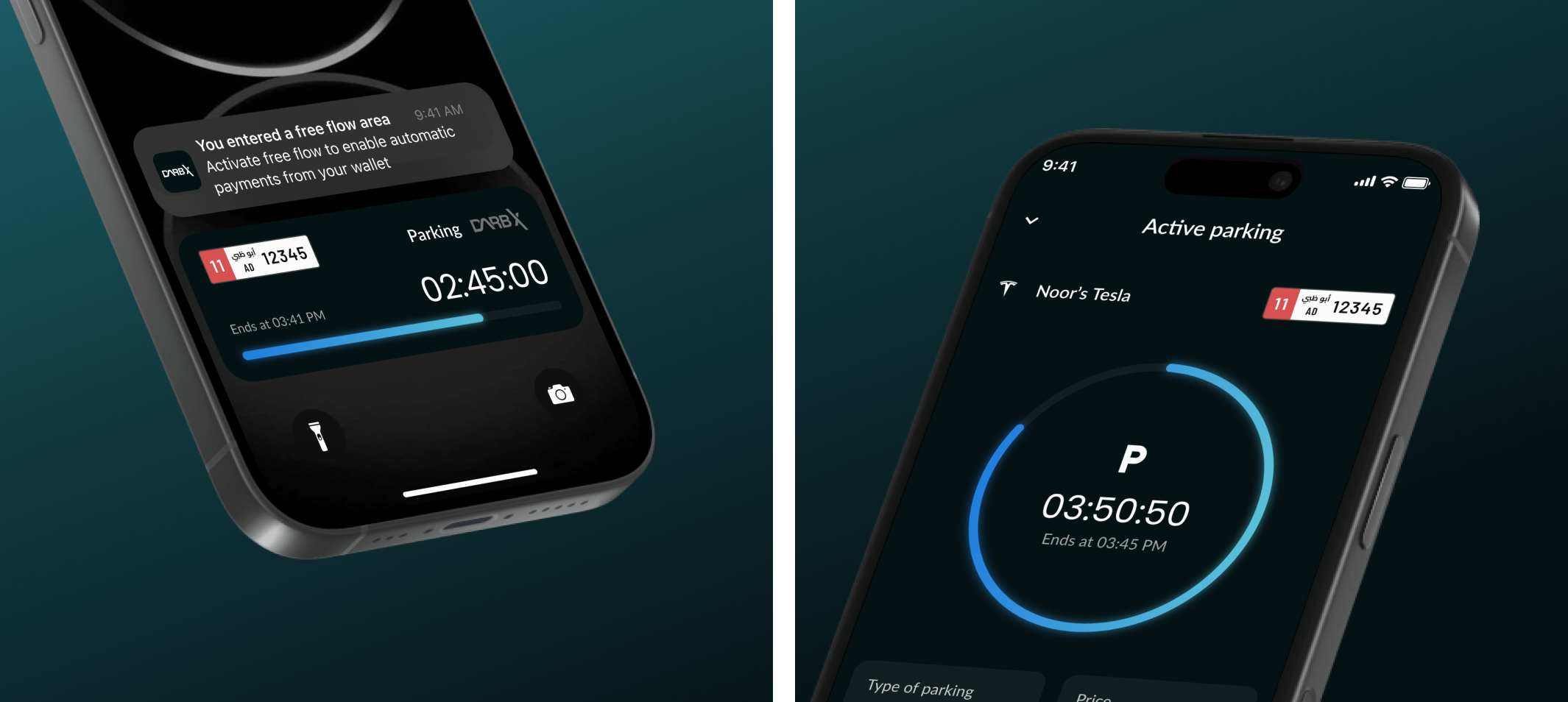
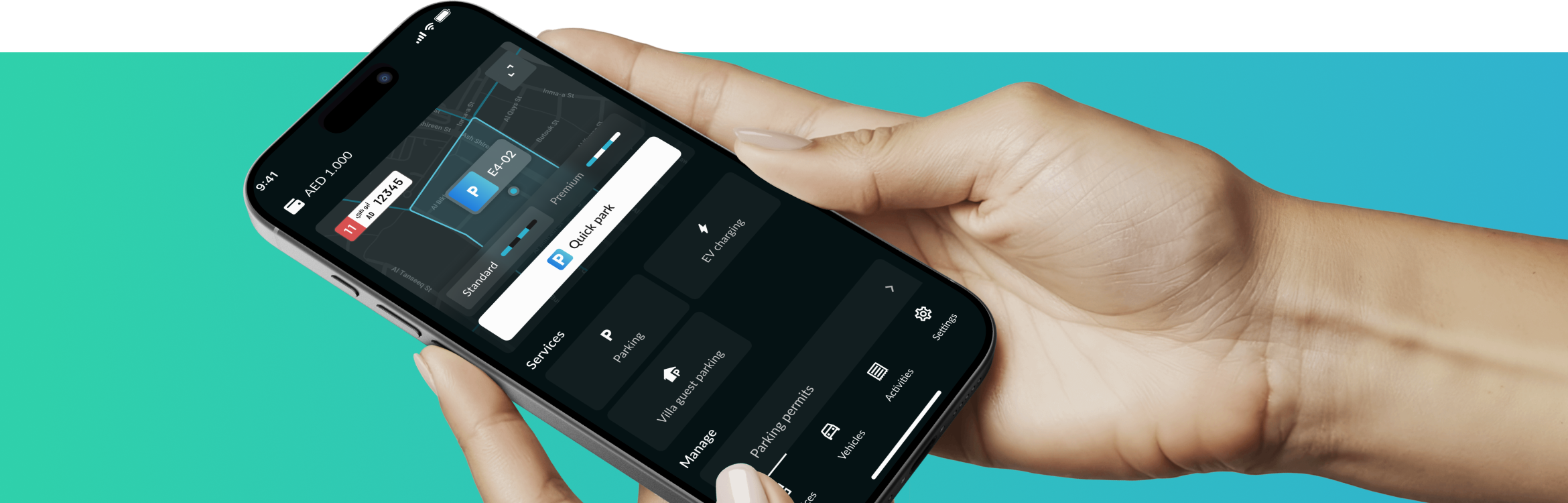
Darb App: A smarter mobility experience
We partnered up with Q Mobility to build a mobility platform focused on future service expansion and, at the same time, to solve big platform issues. The outcome is a unified digital ecosystem with:
🚀 Scalable digital foundation
For the organization, it means a scalable foundation that enables growth and operational efficiency as the service offering grows.
🧩 Transparent processes
Registrations, permissions and permits are transparent and easy to complete without switching between different platforms.
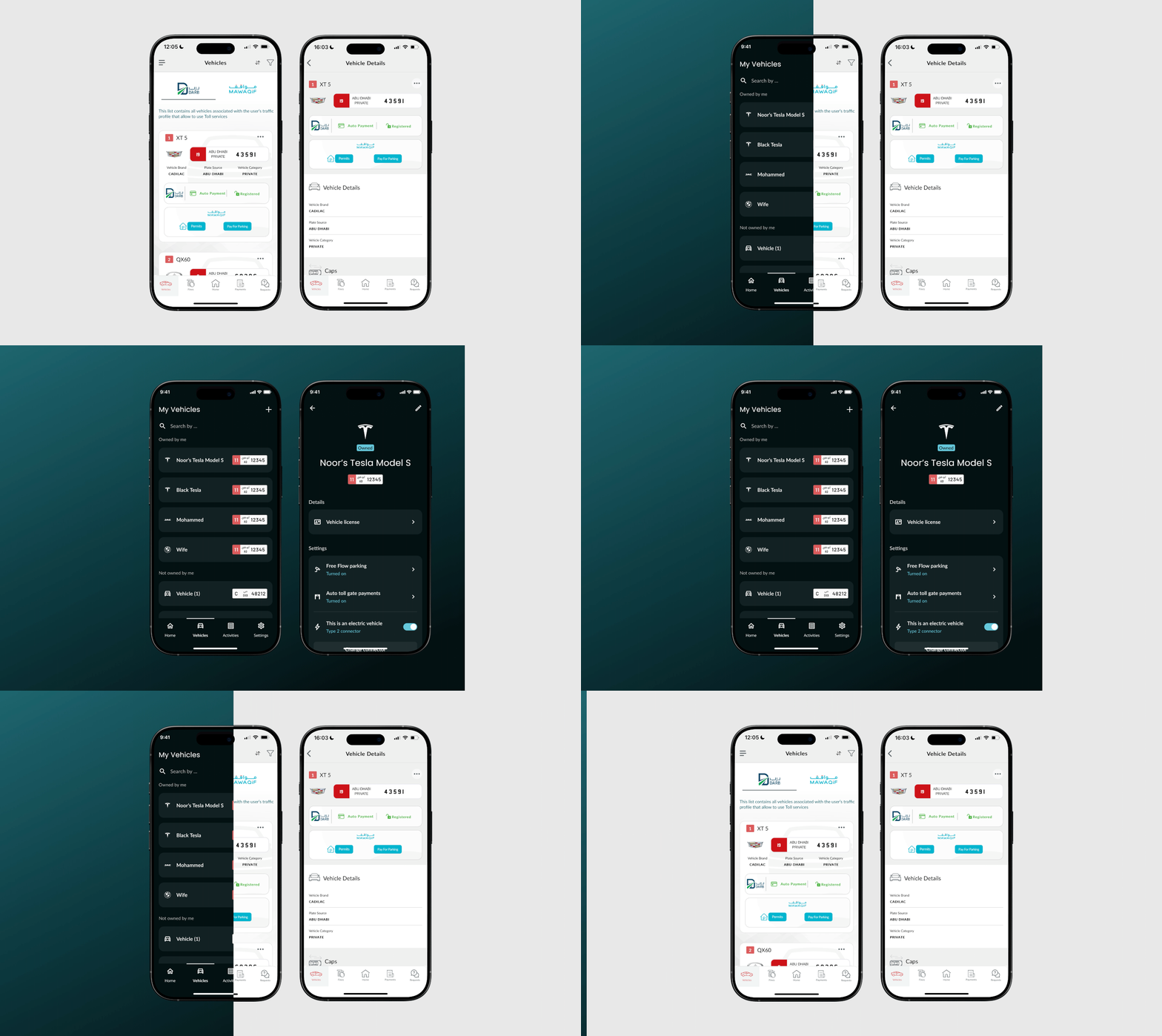
🚗 Easier vehicle management
Households in Abu Dhabi, where vehicles are often registered to one person per household, can now easily manage these.
💳 Solid mobility wallet
With an easy-to-use payment infrastructure for users to use on all mobility services.
🦾 Centralized AI support hub
Minimising the strain on chat and call options through AI-driven knowledge
🙌 User confidence and trust
No more unexpected charges for users due to improper registration or payment failures.
Koos became an extension of our team, challenging assumptions and turning complex journeys into simple customer experiences. They balanced speed with quality to create something that feels native to local users and a foundation that will support our digital ambitions for years to come.
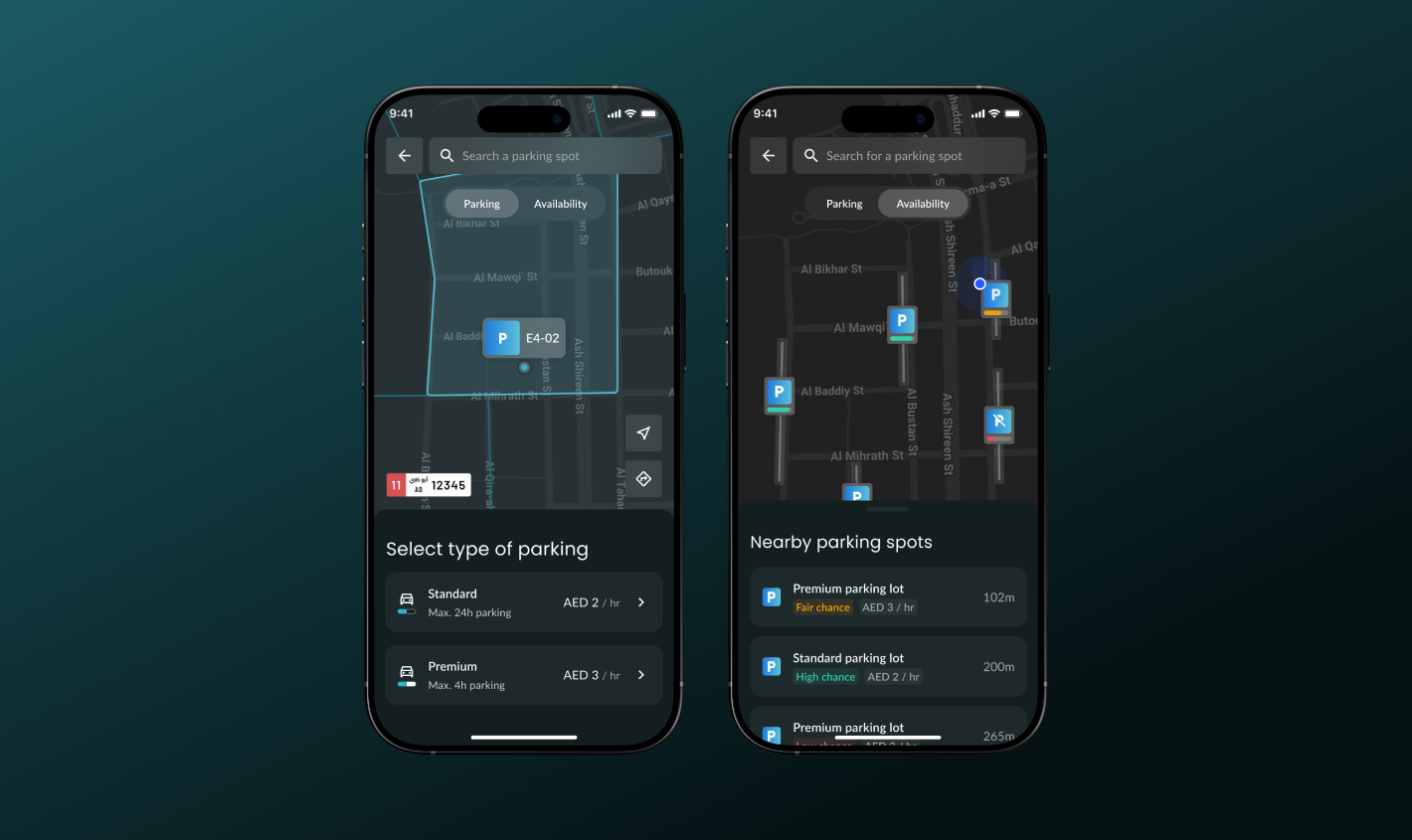
Increasing revenue and reducing strain on customer care
Q Mobility operates at the intersection of regulation, infrastructure and public service. Increasing revenue meant designing an end-to-end mobility experience that fulfils all residential needs – from public parking and toll gates to permits, payments and vehicle management – while reducing operational costs.
Its service offering relied heavily on third-party platforms because it lacked a single digital mobility infrastructure that connects services, data, payments, and user accounts. This fragmentation of touchpoints confuses users, leading to fines, low adoption and high pressure on customer care. It also prevents the city from evolving towards smarter, data-driven mobility services.
The ambition was to digitalize and take control over the scattered touchpoints by building a connected mobility ecosystem that is unique to the Emirates.
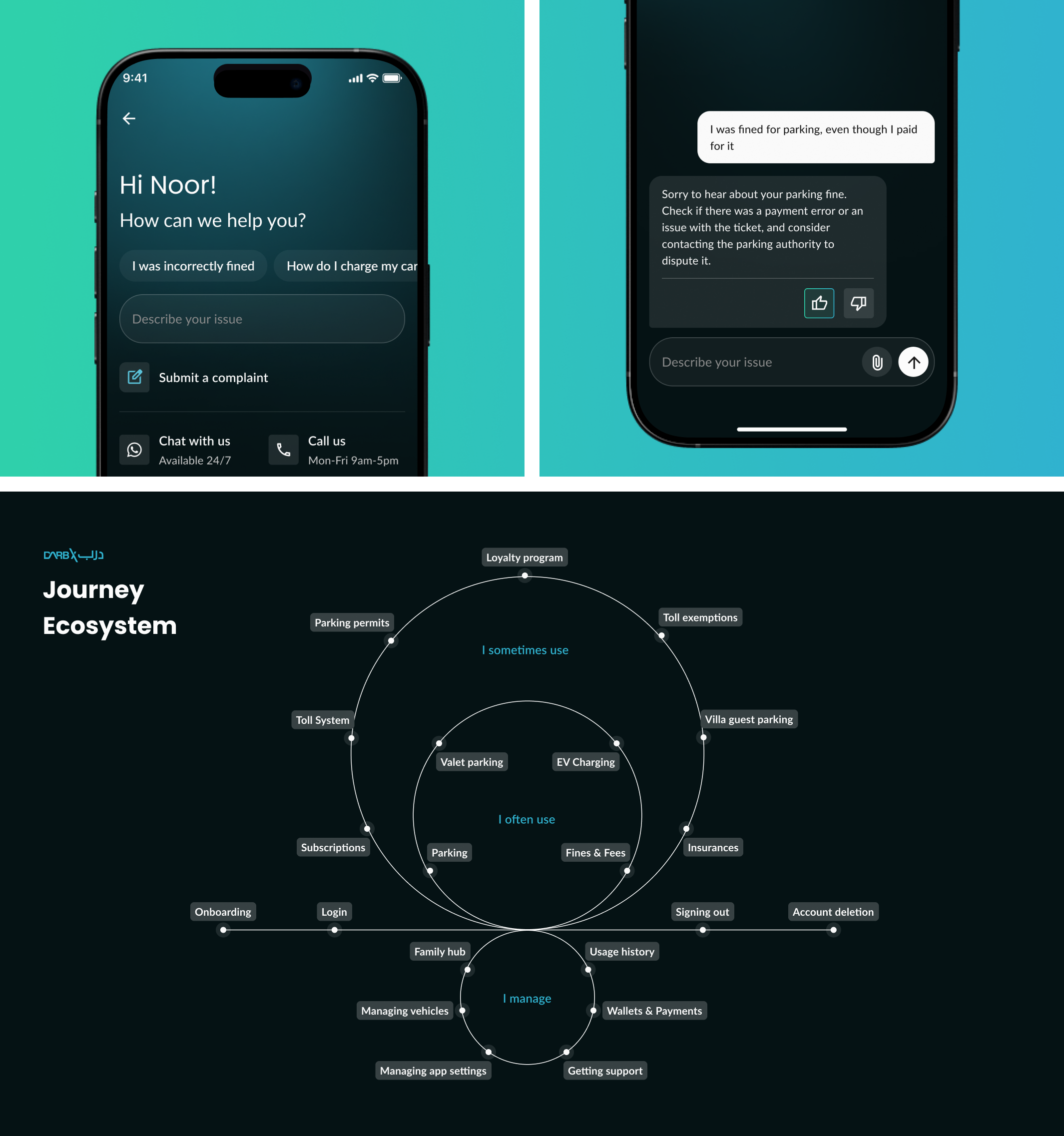
Designing a smart mobility app
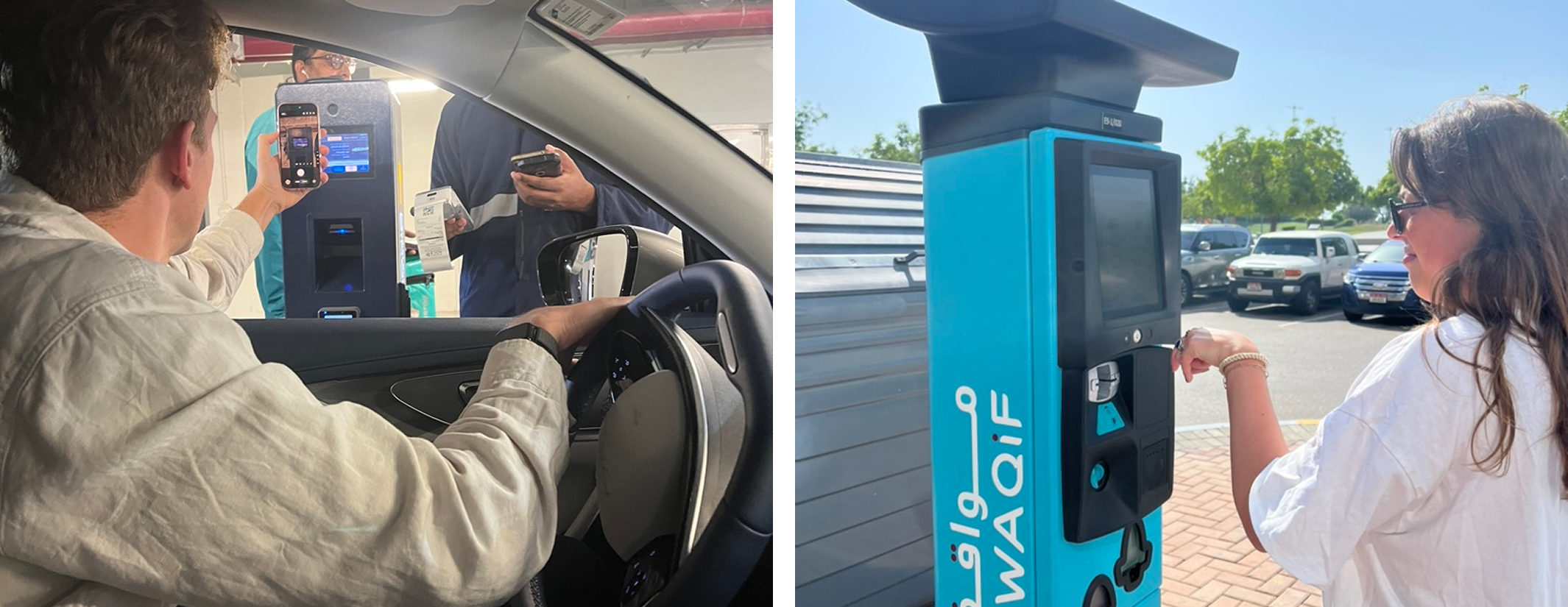
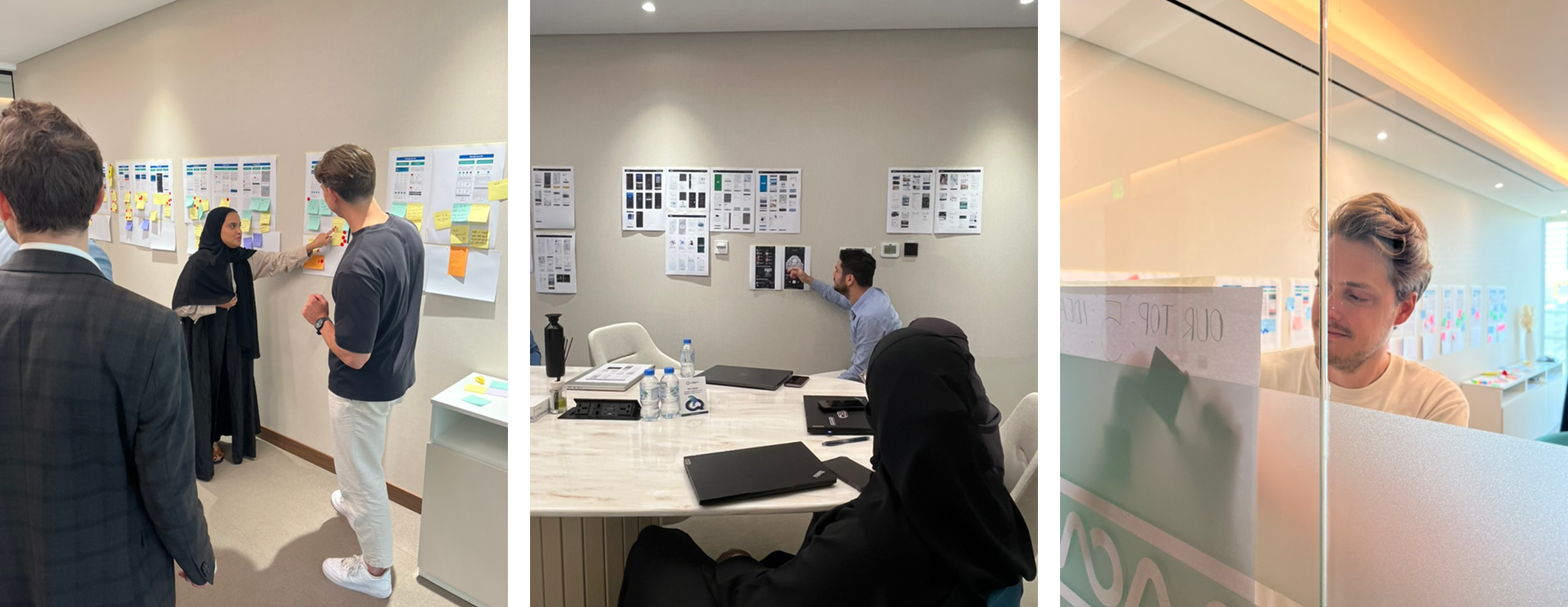
We approached this collaboration through a design thinking lens. Starting with understanding before building. Instead of immediately redesigning screens, we immersed ourselves in the ecosystem: service safaris, regulations, backend logic, customer care data, internal usage patterns and stakeholder ambitions. Through stakeholder workshops, service blueprinting and journey mapping, we reframed the challenge from “redesign the app” to “redesign how mobility works as a connected system.”
Throughout the collaboration, we navigated key tensions: speed versus validation, ambition versus feasibility, global UX patterns versus local cultural nuance. By making these trade-offs explicit and aligning strategy with execution, design became a strategic layer within the organization, not only a delivery function.
Next steps
This collaboration lays the foundation for:
- Using the built design system to integrate more and more services through POC and Experiment design.
- The team will actively support Product Ownership and combine a lean startup for design and SCRUM for dev handover to set a sustainable process within Q MOBILITY to tackle design challenges.
- With the launch of the app for test audiences, the first feedback loops will add a lot of work to the backlog, so the challenge will remain to scale up while improving the existing service. With mutual importance.
- In the short term, the team will collaborate with Q Mobility throughout 2026 to spot new opportunities and incorporate new services into the app.
The app is designed to evolve, with Q Mobility and with the people of Abu Dhabi.
