


The future of strategic design is not about producing more deliverables faster. It is about shaping adaptive systems, guiding AI-assisted decision-making, and building trust in increasingly automated environments.
The trends shaping what strategic design means
Trend 1: Building is the new designing
From plans to proof
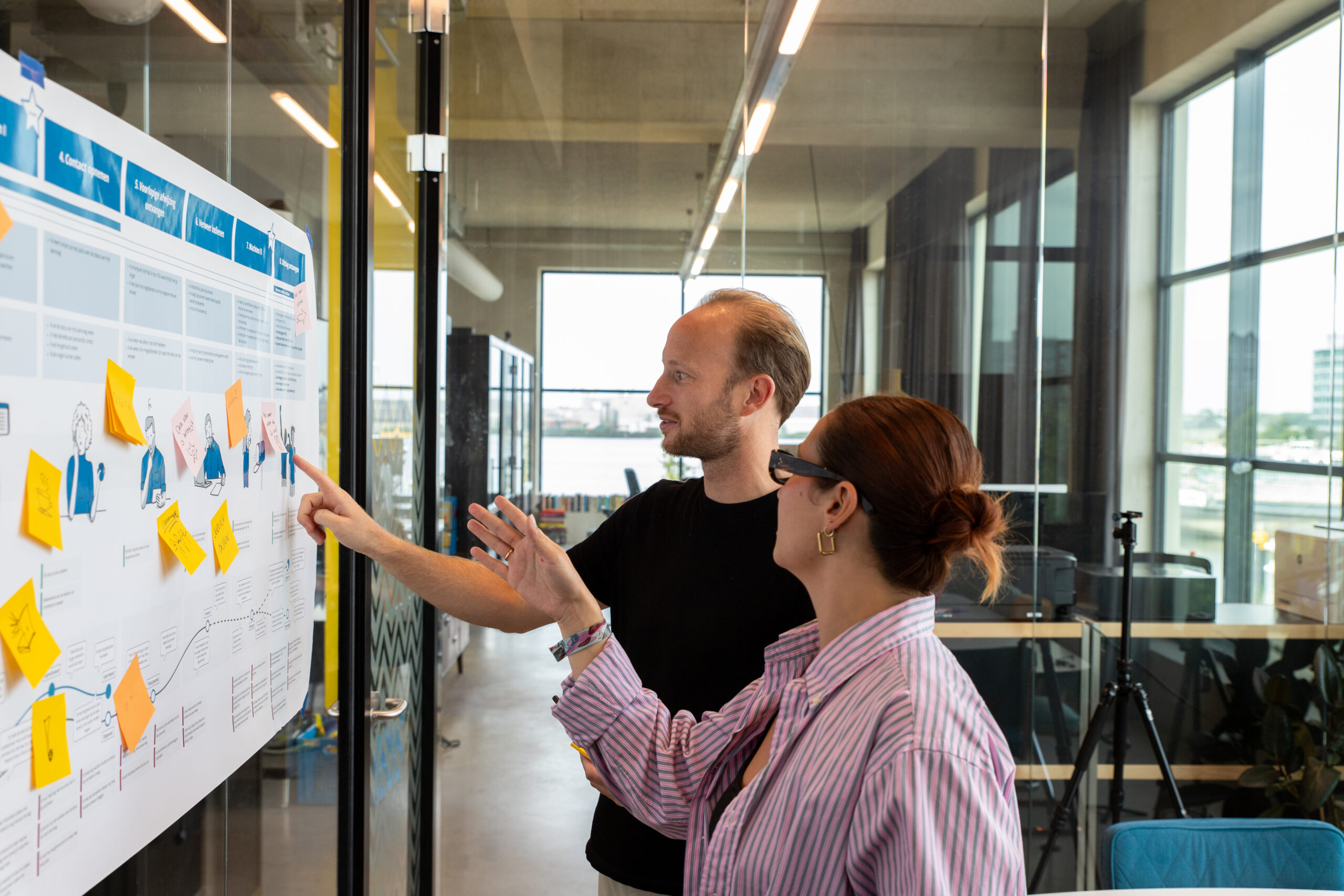
Strategy alone is no longer enough. Our clients now expect working prototypes and MVPs to test ideas in the real world, not just beautiful slides and screens. Design has shifted from describing a possible future to actively building and validating it through functional simulations.

Trend 2: The value equation is inverted
From effort to judgment
In the past, agencies were paid for time and output. Today, AI handles production, making “effort” a commodity. The new premium is placed on framing the right choice. Clients pay less for the “making” and more for the clarity, direction, and moral responsibility of the decisions behind the work.
Trend 3: Design as a living system
From static deliverables to evolving systems
Static deliverables are relics of the past. In a world of agentic AI, services continue to evolve even after delivery. This requires “system stewardship”, a continuous cycle of monitoring, adjustment, and care, much like managing growing cities rather than just building at once.
Trend 4: Human trust becomes scarce
From cryptic algorithms to radical transparency
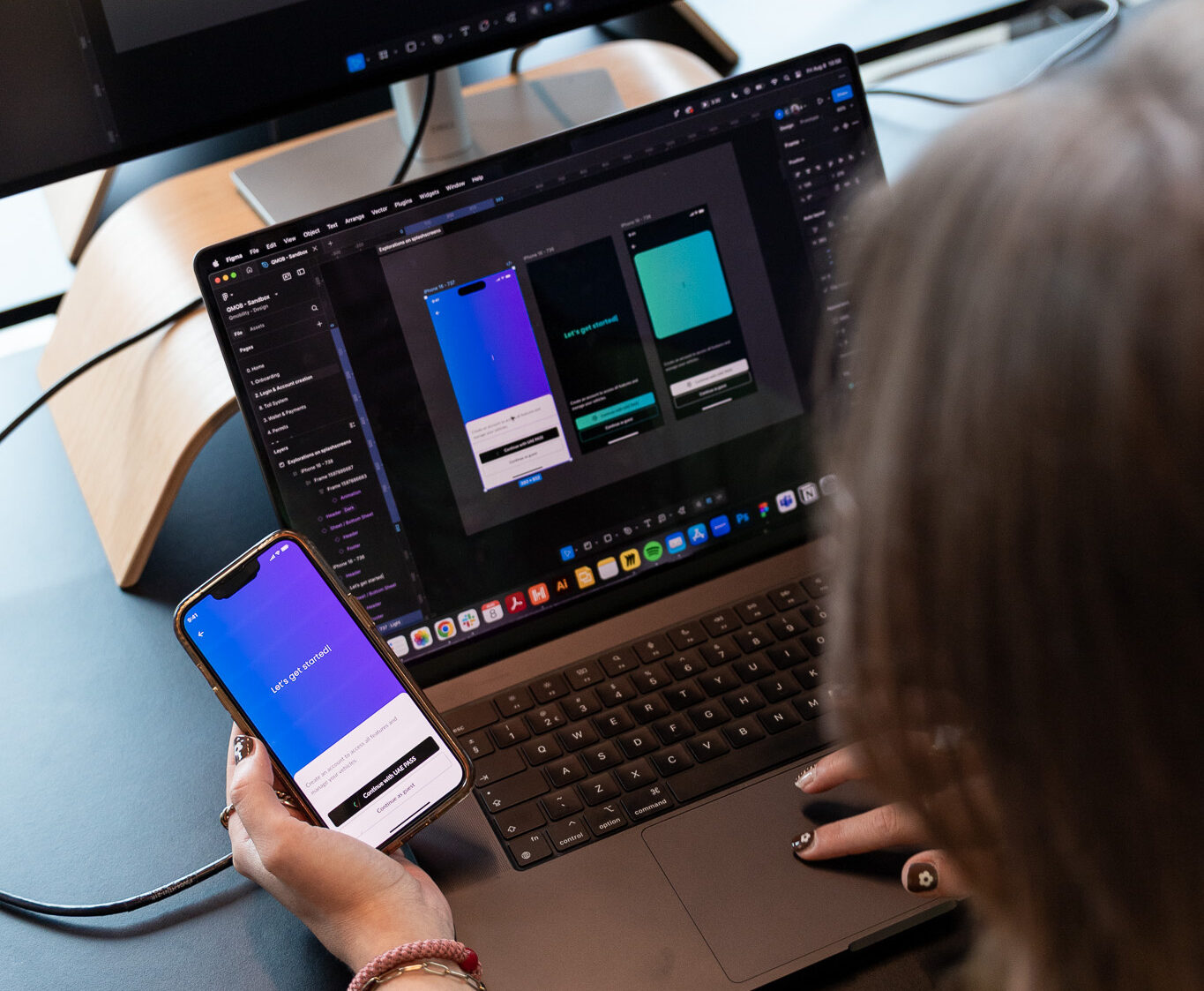
As AI systems become increasingly complex and difficult to understand, human trust is becoming a rare commodity. Users are questioning decisions made by “black box” systems, and distrust is growing due to deepfakes and synthetic content. In this landscape, authenticity, transparency, and ethics become key differentiators and central design responsibilities through a human-centered AI approach.
Trend 5: New hybrid roles emerge
From single skills to blended expertise
We are shifting into broadening our T-shape. The boundaries between design, technology, and strategy are fading, which gives rise to new roles that combine human insight with AI fluency. We see effective collaboration between humans and AI as a core design skill in the near future, so we’re embedding it in-house with an AI Technologist and working closely with our partners to explore it together.
So, what does the future of strategic design actually look like?
If we are honest, this is not something you can approach as trends or a checklist. It forces a more fundamental question: Where are you heading as a designer or agency, and what role do you want to play in creating value?
Because staying relevant is no longer about producing better artefacts. If that is the game, we are already losing.
What is emerging instead is a shift in position. Strategic design is stretching in two directions at once.
- Upwards, into shaping strategy, decisions, and direction.
- Downwards, into making things real, faster, more tangible, more testable.
This changes our role entirely.
As designers, we are not just crafting screens or decks anymore. We are helping define what should exist in the first place, and making sure it actually works in the real world. That means shaping systems, building capabilities, and delivering value in ways that go beyond design as a deliverable.

4 Strategic design future scenarios
At Koos, we have identified and explored four possible paths as a strategic map for the next decade:
1. The Algorithmic Factory
Scaled automation is the business model.
- Operational focus: Agencies operate as automated production systems where AI replaces repetitive human work.
- Competitive drivers: Competition is driven by speed, extreme efficiency, and low costs.
- Risks: Value becomes standardized, margins shrink, and depth, trust, and differentiation are easily lost.
2. The Boutique of Soul
High-touch human craft is the premium.
- Operational focus: Agencies prioritize deep human insight, bespoke craftsmanship, and relationship-driven work.
- Competitive drivers: Clients seek high levels of authenticity and trust that automated systems cannot provide.
- Risks: Scale remains strictly limited, costs stay high, and relevance may decline as systems grow beyond human capacity.
3. The Enterprise Platform Partner
Evolving into technology and SaaS providers with scalable IP.
- Operational focus: Agencies build products, platforms, and self-service tools.
- Competitive drivers: Value comes from proprietary IP and recurring revenue models.
- Risks: While scale and efficiency increase, human judgment and client nuance risk being sidelined.
4. The Intelligence Architect
Human judgment guides intelligent systems.
- Operational focus: Agencies design intelligent systems that stay aligned with human values, focusing on diagnosis, simulation, and governance.
- Competitive drivers: Value is measured through trusted outcomes and taking responsibility for how systems behave over time.
- Strategic fit: This model aligns with the shift from deliverables to trusted outcomes and system stewardship.
What future fits you and how should you adapt?
The future of our industry is not an inevitable wave to ride, but a system to be designed. As the boundaries between technology and human empathy continue to dissolve, we must look beyond our existing toolkits and delivery models.
Does your organization resonate with the deep craftsmanship of the ‘Boutique of Soul,’ or are you prepared to embrace the systemic accountability of the ‘Intelligence Architect’?
What future clearly does not fit you?
Which clients benefit most from judgment, trust, and long-term responsibility rather than speed alone?
What new choices need to be made on skills, workflows, ethics to be able to move forward?
The future of strategic design will be shaped by those willing to rethink how they create value. What future are you choosing to build?
FAQs
Strategic design is the practice of applying design thinking to business strategy, systems, services, and organizational transformation.
AI is automating production tasks, which is increasing the demand for strategic direction, systems thinking, experimentation, and ethical oversight.
Future strategic designers will need:
- AI fluency,
- systems thinking,
- facilitation,
- prototyping,
- strategic communication,
- ethical decision-making.
AI will likely replace repetitive production work, but strategic design roles focused on judgment, creativity, trust, and decision-making are expected to grow.
At Koos, human-centered AI design focuses on transparency, ethics, usability, and maintaining human trust in AI-driven systems.