
Client
Eurocross
Challenge
Create a digital journey that reduces uncertainty for travellers while giving Eurocross the information it needs to coordinate assistance efficiently
Impact
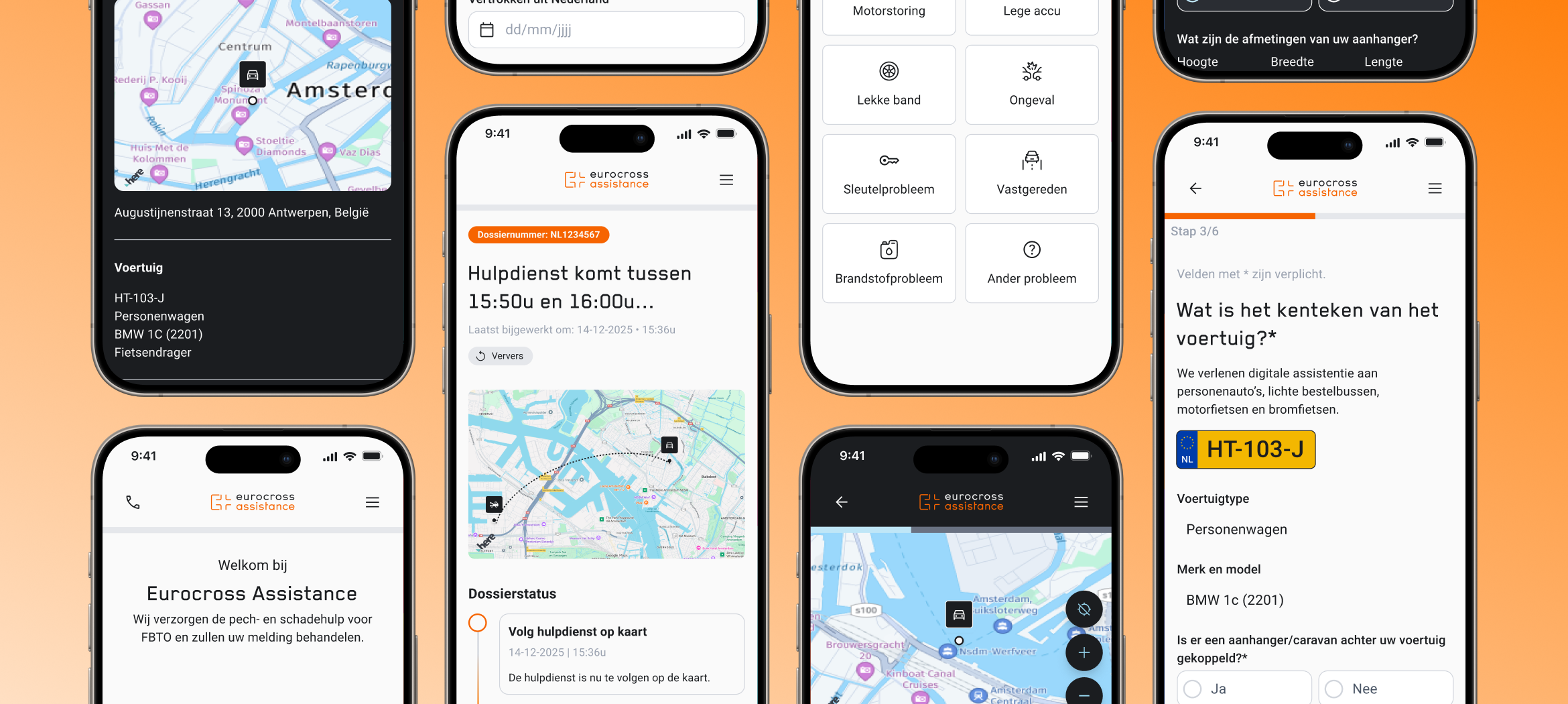
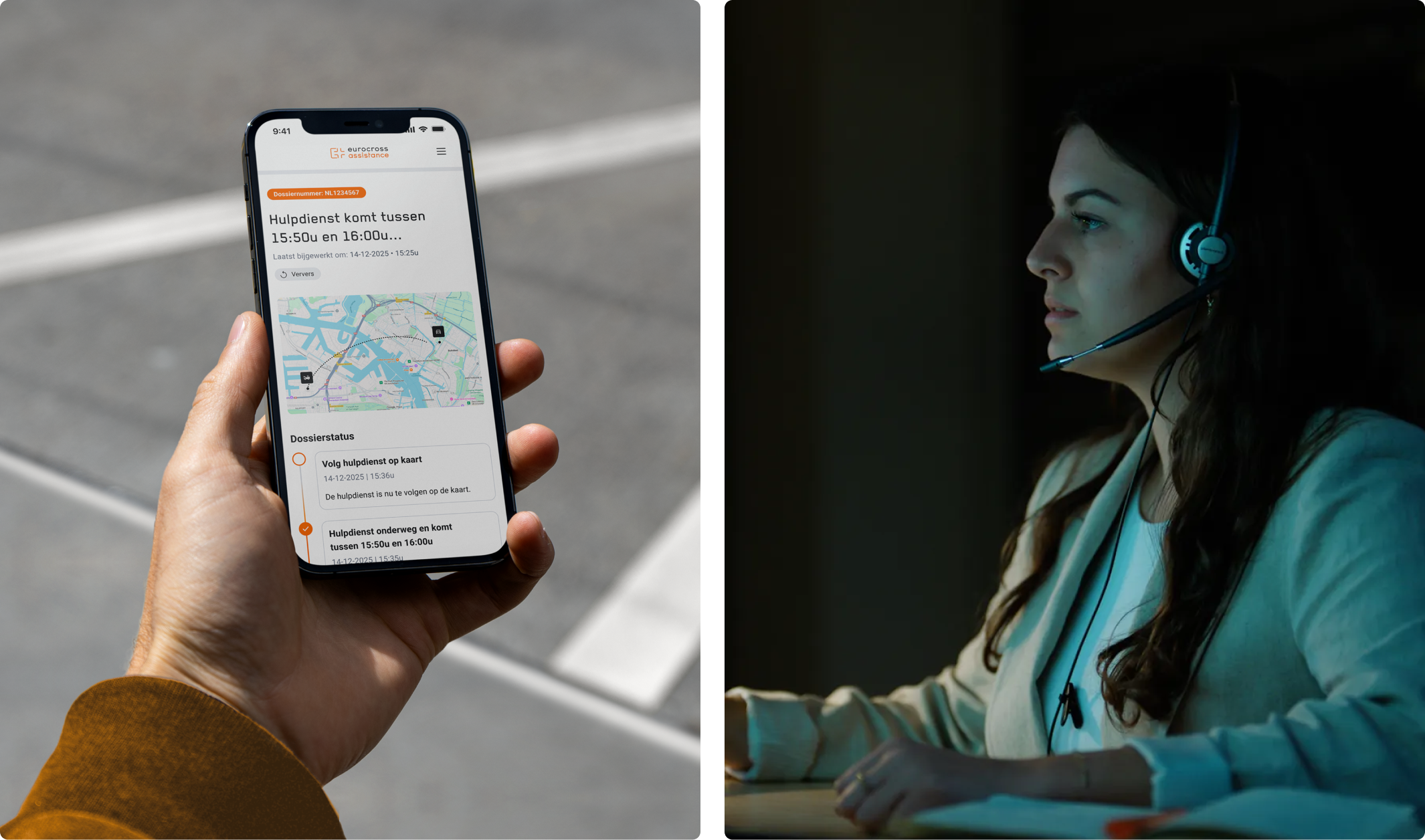
A digital assistance flow that replaces uncertain waiting with a live status and real-time map view of the approaching help service
Help is coming. But when?
When a vehicle breaks down, travellers need more than reassurance that help is on its way. They need to know what happens next. For Eurocross, the challenge was to simplify how travellers request roadside assistance while giving them greater visibility throughout the process. Phone-based reporting could be time-consuming, and a lack of updates often led to follow-up calls from travellers simply wanting to know when help would arrive.
The opportunity was to create a digital journey that reduces uncertainty for travellers while giving Eurocross the information it needs to coordinate assistance efficiently.
From phone call to live tracking
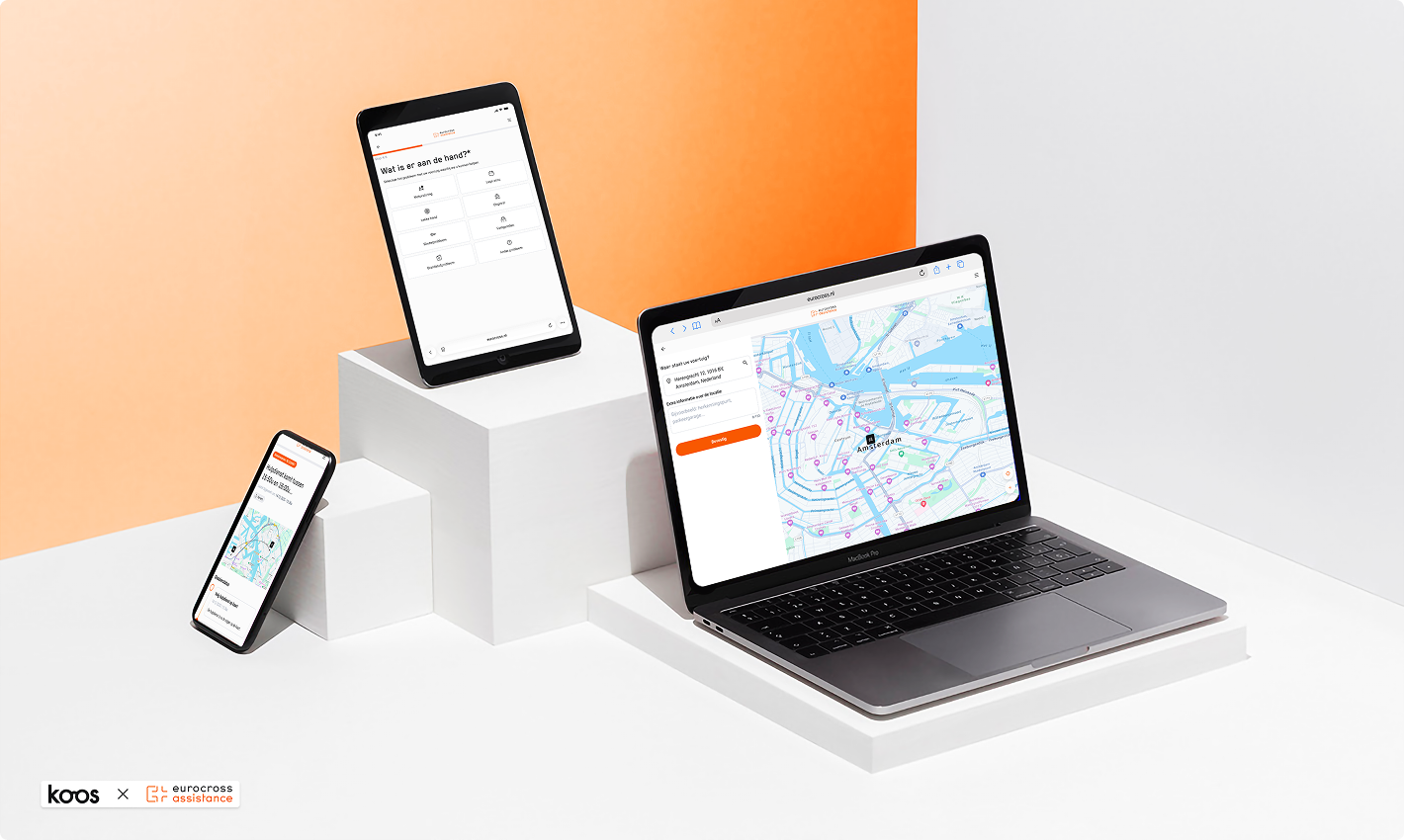
Roadside assistance has always started with a phone call and ended with a hopeful wait. The new Eurocross web app turns that into one clear digital journey, from the first report to the moment help arrives.
Now, travellers no longer wait in line on the phone and wonder whether anyone is coming at all, and when. They can follow it.
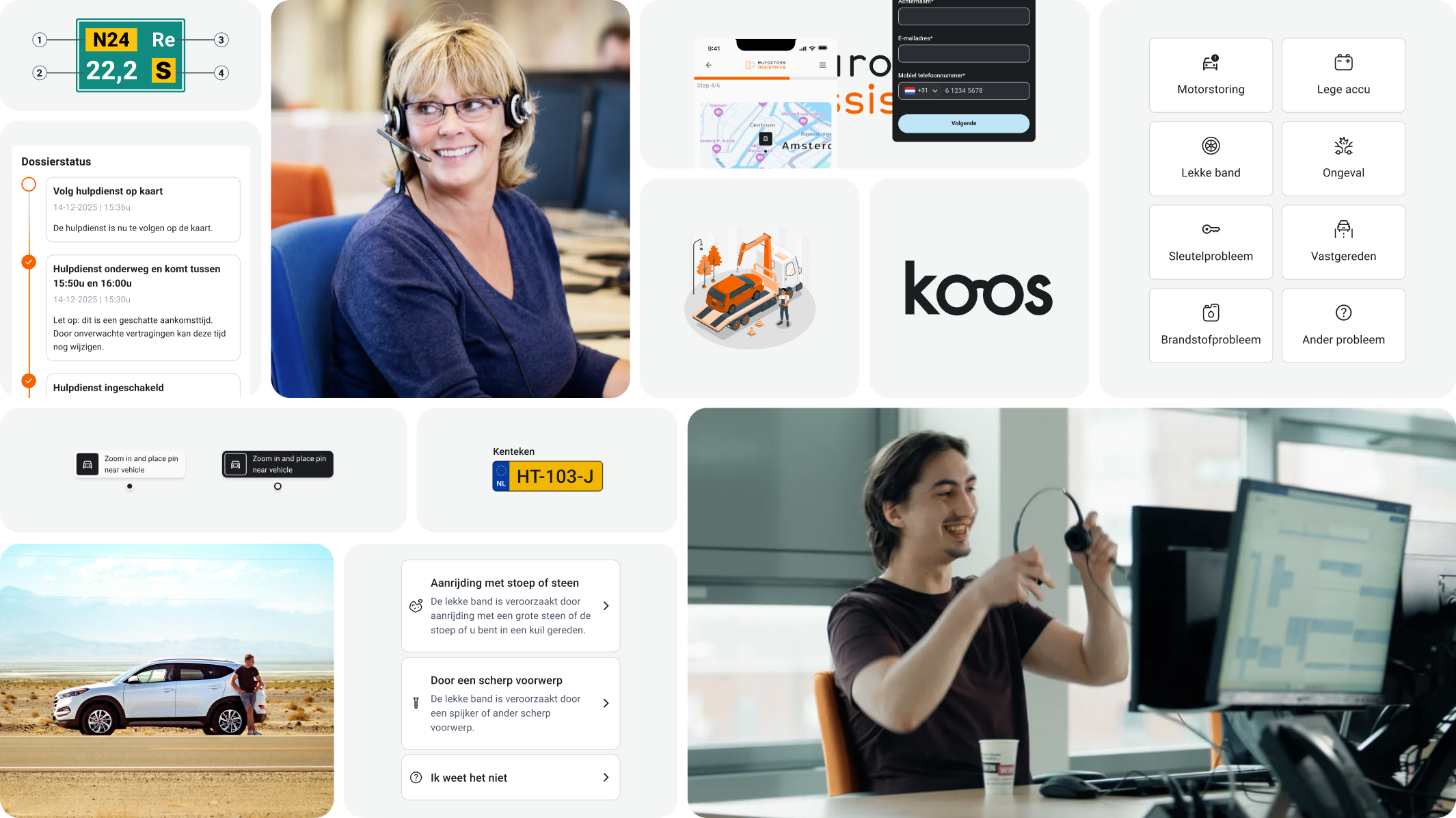
Online reporting
of breakdowns and damage, at home and abroad
Guided steps
that ask only what the alarm centre needs to act
A live status overview
that shows where the case stands at every moment
Real-time map tracking
of the help service on its way

Reporting a breakdown in minutes, wherever you are
No hold music. No spelling out your licence plate over a bad connection on a foreign roadside. Travellers report their breakdown or damage directly online, in a short guided flow that works the same in Utrecht as in the Alps.
Every question in the flow earns its place. We stripped the report down to what the alarm centre needs to send the right help, and nothing more. That means fewer questions for a stressed traveller and a more complete report for Eurocross from the very first moment.
Starting where the calls come in
To design a better wait, we first had to understand it. So we went to where roadside assistance actually happens:
- Listening in on live calls at the Eurocross roadside assistance alarm centre, to hear what travellers ask, worry about and need in the moment
- Interviewing both sides of the call: travellers who had broken down before, and the alarm centre staff who answer them
- Working as one team with Eurocross front-end and back-end developers and knowledge specialists, who brought expert insight into operations and customer needs
That collaboration meant every design decision was tested against operational reality from day one, not after handover.
The key insight: the first call is rarely the last
Many travellers call the alarm centre again after their initial report. They rarely have new information to share. They want to know where things stand: is help on its way, how long will it take, how far away is it?
Every one of those follow-up calls points to the same unmet need: visibility. That insight became the starting point for the live status overview and real-time map tracking.
Next steps
This webapp is more than a new channel. It lays the foundation for Eurocross to run roadside assistance on its own terms, through a digital journey it fully owns.
Next, we are exploring how to bring the live status overview to everyone stranded at the roadside, not only those who report digitally. That includes travellers who still pick up the phone and those who report through partner apps. Everyone waiting for help deserves to see it coming.
We are also looking at scaling the experience beyond the Netherlands, to other Eurocross offices such as those in the Czech Republic and Slovakia.
