
Client
Politie - Digital Transformation
Challenge
To bridge the experience gap for new officers in crime scene management due to a retiring workforce and shortened academy training
Impact
A validated and released VR training concept that effectively prepares officers for complex, high-stress crime scene scenarios by focusing on proactive decision-making
Solution
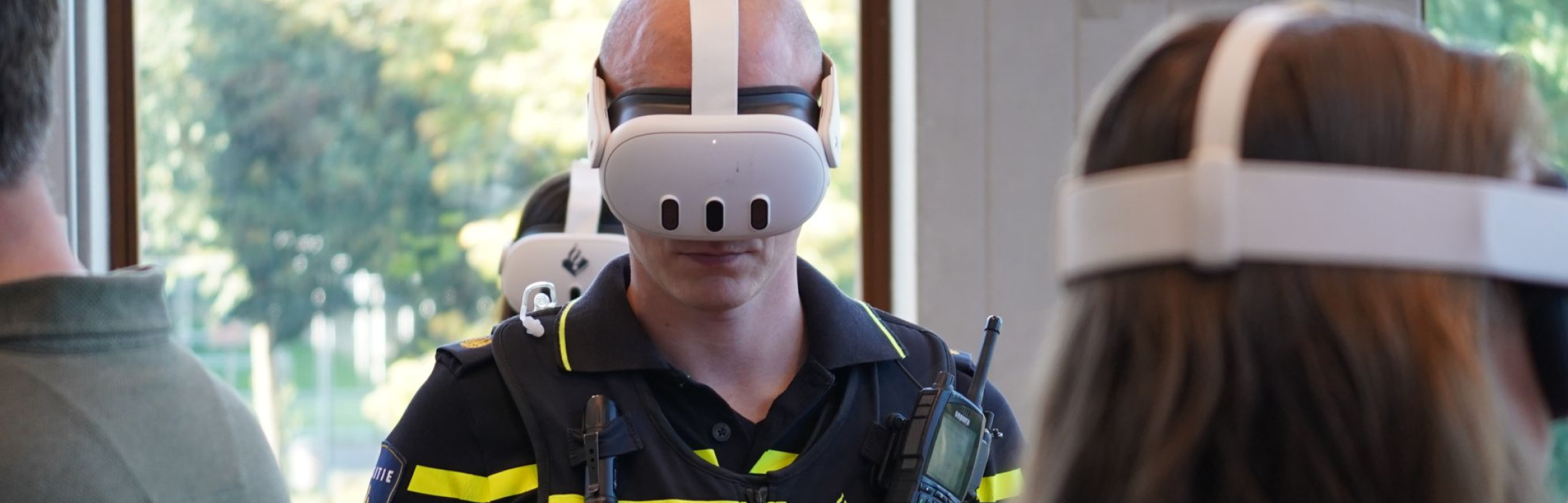
An immersive VR training for police crime scenarios
Together with the Extended Reality team within the Police Department, we developed a VR training simulation that immerses officers in dynamic, real-life crime scenes. It moves beyond static checklists, forcing officers to prioritize actions, identify digital and physical evidence, and manage unpredictable events in real-time. This allows them to build a mental ‘checklist’ and develop the crucial skill of proactive decision-making under pressure.
The simulation is designed to be a scalable and consistent training platform, ensuring every officer can build the confidence and competence needed to manage a crime scene effectively, regardless of their location or access to experienced mentors.

We found the collaboration with Koos to be extremely fruitful. Their design-driven approach, commitment, and creativity contributed to ensuring that the VR training program ``Blauw ter Plaatse`` perfectly aligns with the experiences and learning needs of our operational colleagues.
Challenge
Preparing the next generation for unpredictable crime scenes
The Dutch National Police faces a dual challenge; while a significant number of experienced officers are reaching retirement age, there is a broader, ongoing difficulty in attracting recruits to fill the gaps. This pressure on personnel has led to condensed training programs, creating a critical gap between academy theory and on-the-job practice. As a result, new officers feel unprepared for the dynamic nature of a real crime scene (Plaats Delict or PD), and senior officers must often compensate for this experience gap.

Approach
Co-designing a solution for crime scene management
Our process was built on a deep, human-centered investigation into the daily realities of police work:
- In-depth interviews with 11 officers, from recruits to seasoned veterans and specialists, and 149 reactions to an additional survey
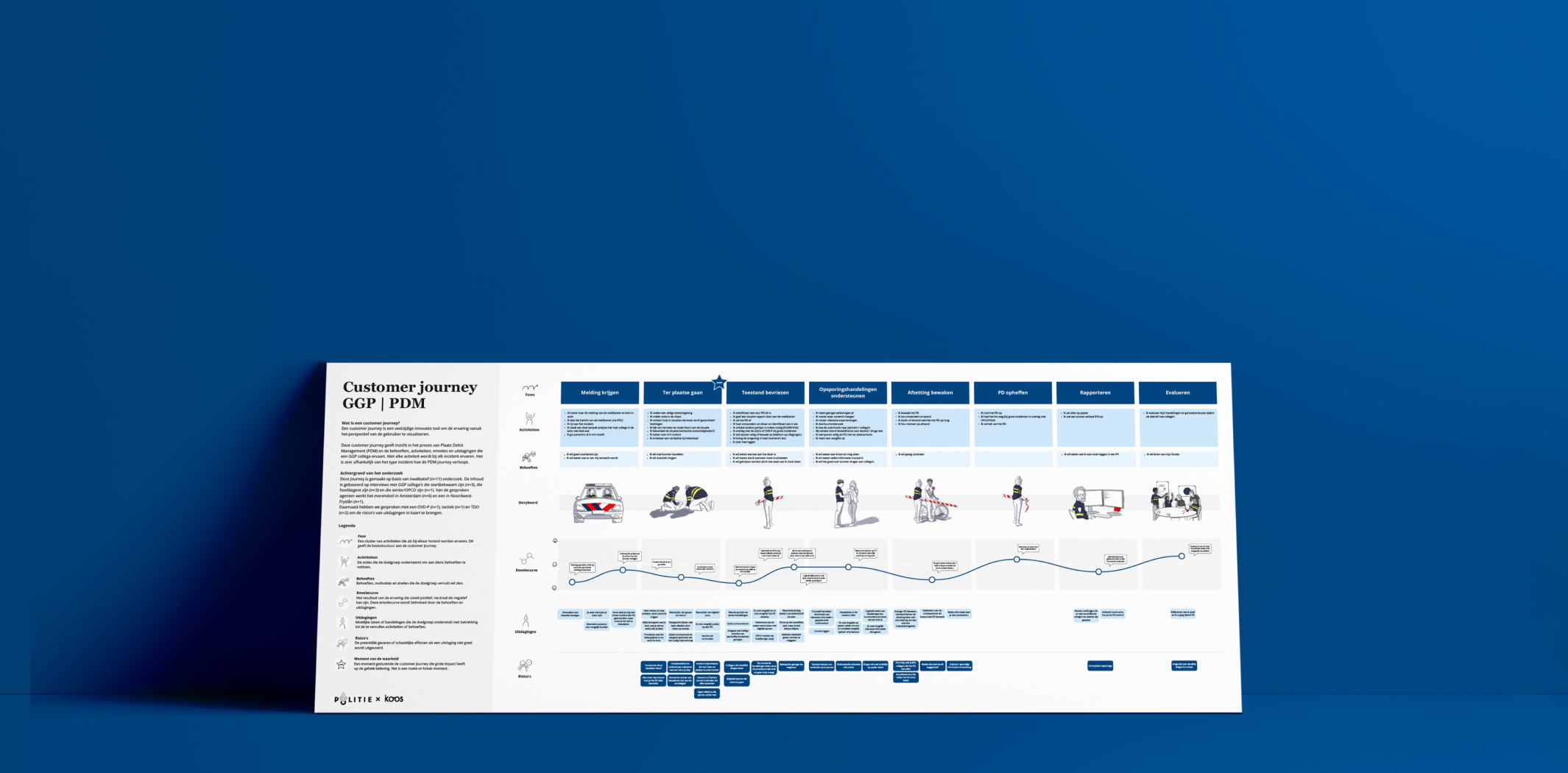
- Mapping the entire crime scene management journey to visualise the experience of police officers
- Prioritisation of the most important challenges that police officers face and the related risks
- Collaborative design sprint with the police team, in which we translated these insights into tangible learning goals, VR concepts and a storyboard of the VR training
- Rapid prototyping of the VR training concept, testing it directly with officers to validate its effectiveness and ensure the final training was built for them, by them.
Implementation
Updating police training methods
This validated prototype sets the stage for a broader transformation in police training. What is happening now:
- Full-scale development: Partnering with a VR development firm, VR Owl, we built the complete training scenarios based on our validated blueprint.
- National rollout: Creating a plan for implementing the VR training across all police units nationwide to standardize and elevate crime scene management skills.
- Integrated learning: Exploring how to connect this VR module with other training initiatives to create a more cohesive and integrated professional development program for all officers.
